
Italy is one of those destinations that seems to have it all—ancient history, beautiful coastlines, world-famous art, charming villages, incredible food, and countryside that looks like a postcard. But when you're planning your first visit, one question usually comes up pretty quickly: How much time do I actually need?
Should you spend a week exploring the highlights? Is 10 days enough? Or should you set aside two full weeks to experience more of what Italy has to offer?
Having traveled through Italy myself, I can tell you that one of the biggest challenges isn't deciding what to see. It's deciding what to leave for another visit.
And that's where good planning makes all the difference.
Is 10 Days Enough for Your First Trip to Italy?
Absolutely. In fact, I think 10 days is a wonderful starting point for a first visit.
Ten days gives you enough time to experience several of Italy's most iconic destinations without feeling like you're constantly packing your suitcase and rushing to the next train station.
The key is choosing destinations that work well together and resisting the temptation to squeeze everything into one trip.
For most first-time visitors, I recommend focusing on two or three destinations, depending on your interests and travel style.
Italy isn't a country that should be experienced entirely through a checklist. Some of its best moments happen when you slow down, wander into a little café, or discover a beautiful street you weren't even looking for.
A Suggested 10-Day Italy Itinerary
For travelers who want a combination of history, art, culture, and unforgettable scenery, Rome, Florence, and Venice make an excellent introduction to Italy.
Here's how I would divide a 10-day, nine-night vacation.
Days 1–4: Rome — History Around Every Corner
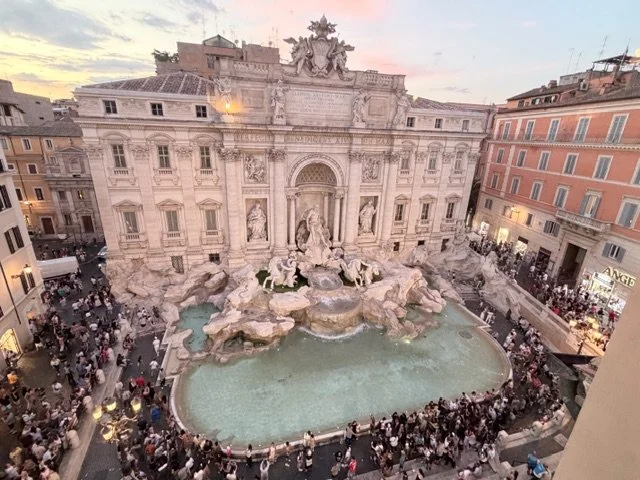
Rome, Italy: The iconic Trevi Fountain at sunset, photographed from the panoramic rooftop lounge at Hotel Fontana during my visit this summer. A beautiful spot to enjoy a different perspective of one of Rome's most famous landmarks!
Rome is a wonderful place to begin your Italian adventure.
From the Colosseum and Roman Forum to Vatican City, the Pantheon, and Trevi Fountain, there's something remarkable around almost every corner.
I recommend spending four nights in Rome, particularly if you're arriving after an overnight international flight.
My arrival-day tip: After an overnight flight, try to stay awake until a reasonable local bedtime rather than going straight to sleep at your hotel. Spend your first day exploring at a relaxed pace, enjoy an outdoor lunch, and get some natural daylight to help your body adjust to the new time zone. If you're exhausted, a short afternoon nap is fine, but try to avoid sleeping for hours. You'll have a better chance of adjusting to Italy's time zone and feeling refreshed for the days ahead.
Over the following days, consider visiting the Colosseum and Roman Forum, exploring Vatican City, enjoying an evening in Trastevere, and simply wandering through Rome's beautiful piazzas.
My travel tip: Choose your hotel location carefully. During my travels, I learned that staying too far from the main attractions can mean spending more time and money on transportation than you anticipated.
A conveniently located hotel can make exploring Rome so much easier, especially when you want to return for a break before dinner. If you're visiting during the summer months, keep in mind that Rome can be extremely hot and crowded. Planning a little downtime in the afternoon gives you a chance to cool off, recharge, and head back out to enjoy the city in the evening. There's just something special about Rome in the evening. The illuminated landmarks, lively piazzas, and outdoor restaurants give the city an entirely different atmosphere. Many of the popular areas are enjoyable to explore after dark, especially when you stick to well-traveled streets and remain aware of your surroundings.
Days 5–7: Florence — Art, Food, and a Taste of Tuscany
Florence is one of my favorite destinations for experiencing Italy's art, architecture, incredible food, and, of course, its charming historic wine windows, where you can order a glass of wine through a tiny opening in the wall.

One of Florence's charming historic wine windows—a fun and unique experience to add to your first Italy itinerary!
It's also an ideal starting point for exploring Tuscany.
High-speed trains connect Rome and Florence in approximately 90 minutes, making the journey relatively easy.
Spend time visiting the Duomo, seeing Michelangelo's David at the Accademia Gallery, strolling across the Ponte Vecchio, and enjoying Florence's restaurants and markets.
If your schedule allows, consider a day trip into the Tuscan countryside.
Think charming hilltop villages, vineyards, family-owned wineries, and long lunches overlooking rolling hills.
Some of my favorite memories from Italy came from exploring the countryside rather than rushing between major attractions.
My travel tip: Don't feel like you need to visit every museum or historical attraction. Choose a few experiences that genuinely interest you and leave time to simply enjoy the atmosphere of Florence. One of my recommendations is taking a pizza or pasta-making class. It's a fun, hands-on way to experience Italian culture, and there's something special about enjoying a glass of wine while sharing a meal you've prepared yourself.
If Tuscany is a major priority, you might even prefer an overnight countryside stay rather than a day trip.
Days 8–10: Venice — A Beautiful Finish
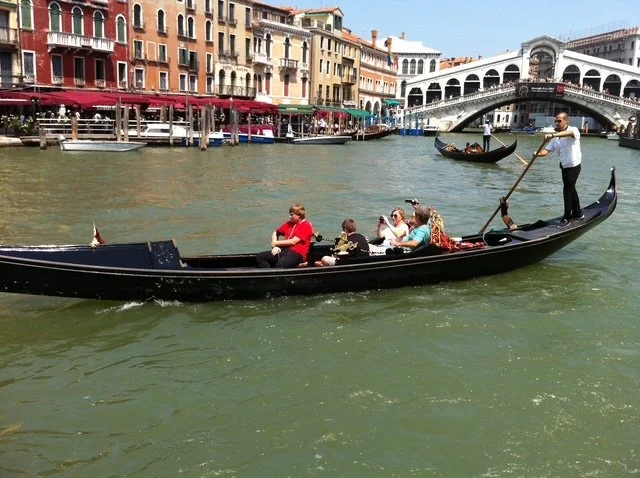
The Grand Canal and Rialto Bridge in Venice, photographed during my gondola ride in 2013. One of those classic Italian experiences I'll never forget!
There's really nowhere quite like Venice.
With its winding canals, historic architecture, and beautiful bridges, Venice offers a completely different experience from Rome and Florence.
Spend your time exploring St. Mark's Square, visiting the Doge's Palace, taking a vaporetto along the Grand Canal, and wandering through the quieter neighborhoods away from the busiest tourist areas.
Florence and Venice are connected by high-speed train, with direct journeys taking a little over two hours.
Two nights in Venice provides a lovely introduction, especially if you're departing from Venice on your final day.
My travel tip: Look into flying into Rome and home from Venice. Booking a multi-city flight can sometimes save you from traveling all the way back to your starting point.
Just remember to consider your flight departure time and transportation to the airport when choosing your final hotel.
What If You Have 14 Days in Italy?
If your schedule and budget allow for two weeks, even better!
Fourteen days gives you more flexibility to explore without feeling rushed.
You might spend additional nights in Rome, Florence, and Venice, allowing time for a countryside excursion, a cooking class, or an afternoon with absolutely nothing scheduled.
Or you could create a completely different itinerary by adding the Amalfi Coast, where colorful seaside towns, breathtaking views, and beautiful Mediterranean waters offer another side of Italy.
Sorrento and the surrounding coast are wonderful options for travelers who enjoy scenic settings, boat excursions, and leisurely waterfront dinners.
Just keep in mind that adding the coast means additional travel time. For a first visit, I'd generally favor four well-chosen stops over trying to fit five or six destinations into two weeks.
My preference? Use those extra days to enjoy your destinations more fully, not simply to add more places to your itinerary.
What About the Amalfi Coast Instead of Venice?
This is one of the decisions I'd encourage first-time visitors to make based on their personal interests.
Venice is wonderful for travelers drawn to history, architecture, and the experience of exploring a city built around canals.
The Amalfi Coast is especially appealing if your idea of an Italian vacation includes coastal scenery, boat rides, waterfront restaurants, and time to relax.
There's no rule that says your first Italy trip must include Rome, Florence, and Venice.
For some travelers, Rome, Sorrento, and Florence might be a much better combination.
The best itinerary isn't necessarily the one with the most famous destinations. It's the one that reflects your interests and how you want to spend your vacation.
Five Things I'd Tell Anyone Planning Their First Italy Trip
1. Don't underestimate travel days.
Even when a train journey takes only two hours, you still need time to pack, check out of your hotel, reach the station, find your platform, travel, and get settled in your next destination.
Changing cities can easily take up a good portion of your day.
2. Stay somewhere convenient.
A beautiful hotel at a lower price isn't always a bargain if you're constantly paying for transportation.
Consider how easily you can reach the sights, restaurants, and experiences you're most interested in.
3. Reserve popular experiences ahead of time.
Major attractions such as the Colosseum, Vatican Museums, and Florence's most popular art museums can have limited availability, particularly during busy travel seasons.
Personally, I like to begin planning my international trips 9–12 months in advance. That doesn't mean every attraction can be booked that early, but it gives me time to research, prioritize must-see experiences, and know when reservations become available.
If the Vatican Museums are on your must-see list, I highly recommend booking tickets in advance. Lines can be incredibly long, sometimes stretching around the Vatican walls. A timed-entry ticket or a skip-the-line guided tour can save you a significant amount of waiting. You'll still go through security, but avoiding the regular ticket line is well worth it, in my opinion.
This is also where working with a travel advisor can be especially helpful. Having someone guide you through the planning process, recommend worthwhile experiences, and help coordinate reservations can make a big difference, especially when you're visiting Italy for the first time.
4. Leave room for unexpected discoveries.
Some of the most memorable travel experiences aren't planned.
A leisurely lunch, an unexpected viewpoint, or an afternoon wandering through a charming village can become the highlight of your trip.
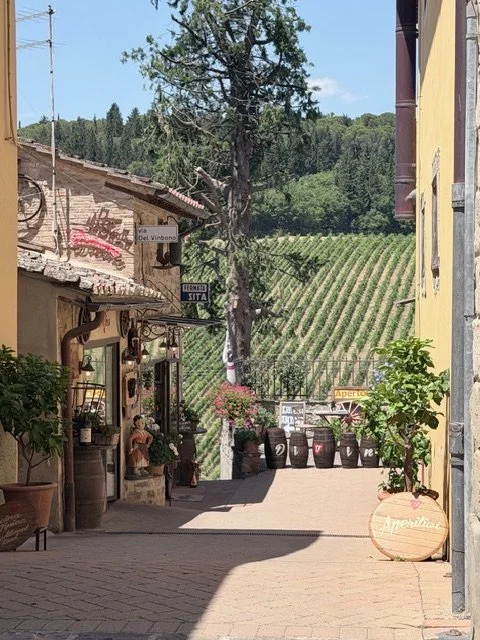
A charming little street we found in the Barberino Tavarnelle area of Tuscany, where some of the best discoveries happen when you slow down and explore.
Don't schedule every minute.
5. Remember that you can always return.
You don't have to see all of Italy on your first visit.
My first introduction to Italy was many years ago during a Mediterranean cruise. I had the opportunity to experience several destinations, but only for a short time in each one. Those little glimpses helped me discover which places I wanted to return to and explore at a slower pace.
And that's exactly what I did! Returning to Italy gave me the chance to spend more time in the places that interested me most, discover some hidden gems, and enjoy experiences I simply couldn't fit into a quick port visit.
Sometimes your first trip is just the beginning of falling in love with a destination.
So, Is 10 or 14 Days Better?
For most first-time visitors, I recommend starting with 10 days.
It's a great balance between experiencing Italy's highlights and keeping your vacation manageable.
If you have 14 days, you'll have more opportunities to slow down, explore beyond the major cities, and enjoy some of the experiences that make Italy so special.
But whether you have seven days, 10 days, or two full weeks, what matters most is creating an itinerary that fits your interests, your pace, and your travel priorities.
Because the best Italian vacation isn't about how many places you visit.
It's about how much you enjoy the places you choose.
Making the Most of Your First Trip to Italy
Planning your first trip to Italy isn't just about deciding which cities to visit or how many days to spend in each one. It's about making the most of your time, choosing experiences that genuinely interest you, and finding the right balance between sightseeing and simply enjoying being there.
After traveling through Italy myself, I've learned that some of the best experiences come from thoughtful planning, while others happen when you leave a little room for the unexpected. Finding that balance can make all the difference.
Want More Italy Travel Tips?
You might also enjoy my article, Lessons from Italy: What I'd Do Differently Next Time, where I share personal experiences, lessons learned, and practical tips from my travels through Italy.
Ready to Plan Your First Italian Adventure?
At Curated Timeless Journeys, I help travelers create personalized vacations that balance must-see destinations with meaningful experiences.
Whether you're dreaming of Rome's historic landmarks, Florence's beautiful streets, a Tuscan wine experience, or the breathtaking Amalfi Coast, I'd love to help you design a journey that feels just right for you.
Visit my Plan My Journey page to share your travel ideas, and let's start planning something unforgettable.