
Planning a Trip to Italy? 7 Things to Know Before You Go
Italy has a way of capturing your heart. From the historic streets of Rome and the rolling hills of Tuscany to the breathtaking Amalfi Coast, every region offers something uniquely beautiful.
It's a country filled with history, extraordinary food, charming villages, magnificent architecture, and experiences that stay with you long after you've returned home.
But planning an Italian vacation can also feel overwhelming.
With so many destinations, transportation options, accommodations, and experiences to choose from, it's easy to underestimate how much thought goes into creating a trip that flows beautifully.
After traveling through Italy and experiencing both its bustling cities and peaceful countryside, I've learned that where you stay, how you travel, and how much time you allow yourself can make all the difference.
Whether you're dreaming of your first visit or planning a return, here are seven things worth considering before you go.
1. Don't Try to See All of Italy in One Trip
One of the biggest mistakes travelers make is trying to fit too many destinations into a single vacation.
Rome, Florence, Venice, Tuscany, the Amalfi Coast, and Lake Como may all be on your wish list, but experiencing them all in one trip isn't always practical or enjoyable.
Every time you change destinations, you're spending valuable vacation time packing, checking out, arranging transportation, and settling into another hotel.
Instead, consider choosing a few destinations that allow you to experience different sides of Italy without feeling rushed.
During my travels, I discovered how much I appreciated the contrast between Italy's lively cities and its quieter countryside.
Rome offered incredible history and energy, but after busy days of sightseeing and navigating crowded streets, I found myself especially drawn to the slower pace of Tuscany and the Amalfi Coast.
My advice: Don't measure the success of your vacation by how many cities you visit. Give yourself enough time to truly experience the places you choose.
2. Choose Destinations That Work Well Together
Italy may look relatively small on a map, but traveling between destinations can take longer than expected.
A thoughtfully designed itinerary considers not only where you want to go, but how those destinations connect.
For example:
Rome and Florence: An excellent combination connected by high-speed rail.
Florence and Tuscany: Wonderful for combining art, history, vineyards, and charming countryside villages.
Naples, Sorrento, and the Amalfi Coast: A beautiful southern Italy experience with opportunities for coastal excursions and visits to Capri.
Venice and northern Italy: A lovely option for travelers interested in historic cities, lakes, and spectacular scenery.
The order in which you visit destinations matters, too. Planning an efficient route can help reduce unnecessary travel time and make your vacation more enjoyable.
Before deciding where to go, think about the experiences you want most.
Do you love historic landmarks and museums? Are you drawn to romantic coastlines, food and wine, or the peaceful Italian countryside?
Perhaps a little of everything?
The best itinerary should reflect your interests rather than simply follow a list of the most popular attractions.
3. Traveling by Train in Italy: What I Learned
Italy's rail network makes traveling between major cities relatively convenient, and I found navigating the trains easier than I initially expected.
Beyond the convenience, I genuinely enjoyed traveling by train. It was a relaxing way to get from one destination to another while taking in the beautiful Italian countryside. Watching the charming villages, rolling hills, and changing landscapes pass by made the journey itself part of the experience.
However, there are a few practical details I wish every first-time traveler knew.
Pay attention to the departure boards.
Your train's platform may not appear on the departure board until approximately 10–20 minutes before departure, although timing varies by station and service.
Don't panic if your platform isn't immediately listed. Keep an eye on the monitors and listen for announcements.
Your train may display a different destination than your ticket.
One thing I learned while traveling by train in Italy is that the destination displayed on the train isn't necessarily the city where you're getting off.
For example, you may be traveling from Rome to Florence, but your train could display Milan (Milano) as its final destination because the train continues beyond Florence.
Likewise, if you're traveling from a city north of Florence toward Florence, your train could display Naples (Napoli) as its final destination.
This can be confusing if you're expecting to see Florence displayed on the train!
My advice is to always check your train number, departure time, and scheduled stops rather than relying solely on the destination shown. As long as your train number matches your ticket and Florence is one of the scheduled stops, you're on the right train.
Pack with train travel in mind.
Many trains have overhead luggage racks, but larger suitcases can be difficult to lift or may not fit.
Some trains also have designated luggage storage areas near the ends of the carriage.
If you're traveling between several destinations, consider how easily you'll be able to manage your luggage through stations, onto trains, and along cobblestone streets.
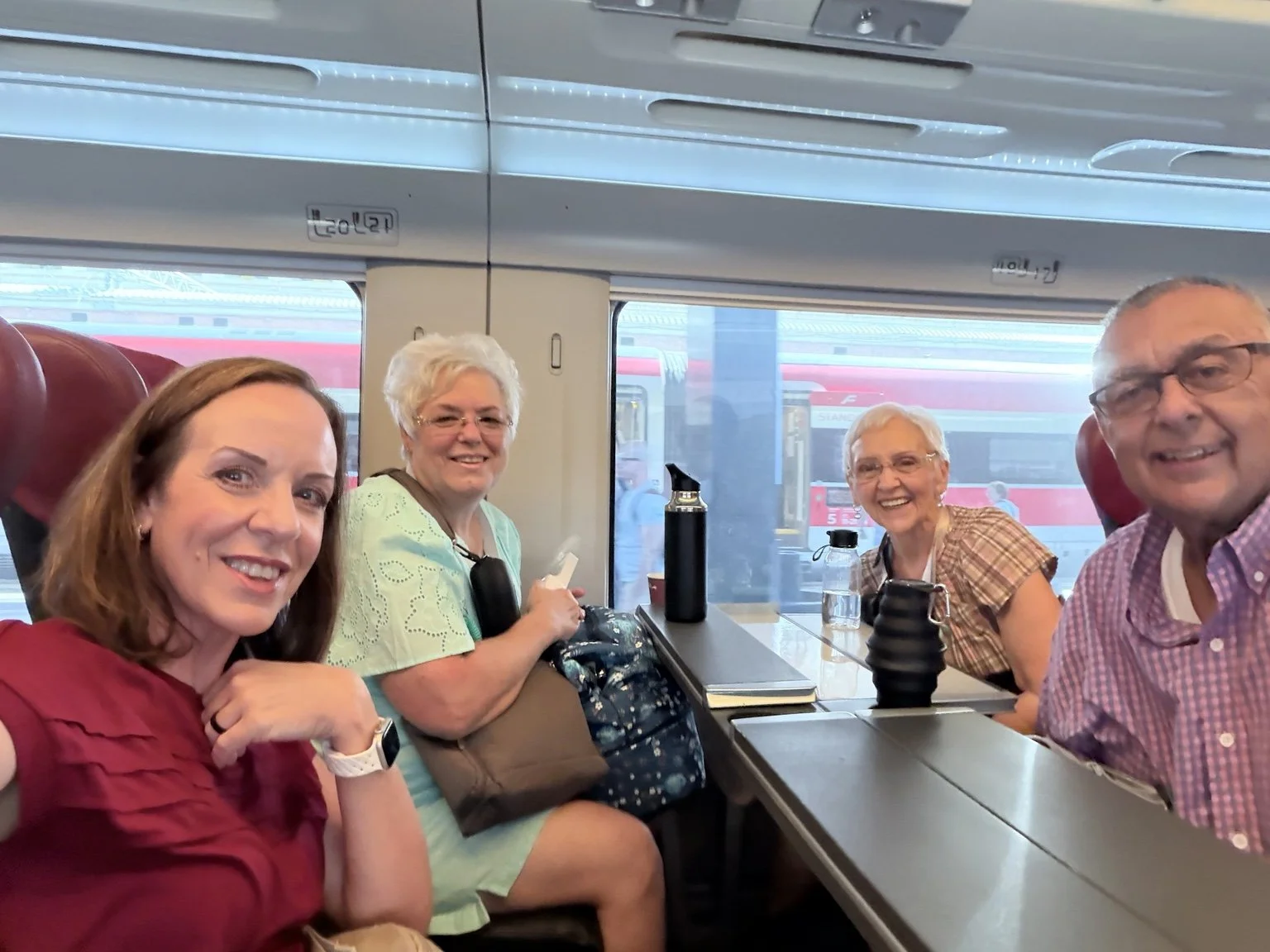
Traveling through Italy by train with family — making memories along the way.
After experiencing train travel firsthand, my biggest advice is to familiarize yourself with the process before departure.
A little preparation can make navigating Italy's rail system much more comfortable and enjoyable.
And remember, transportation doesn't always have to be by train. Depending on your itinerary, a private driver or transfer may be worth considering, particularly when traveling with multiple people or significant luggage.
4. Hotel Location Matters More Than You Might Think
One of my biggest lessons from traveling through Italy came from our accommodations in Rome.
We chose an Airbnb in the residential San Giovanni neighborhood because I wanted to experience a more authentic side of the city and see how locals lived outside the main tourist areas.
And I genuinely loved the neighborhood!
One of our favorite discoveries was Trattoria Etruria 39, a neighborhood restaurant recommended by our Airbnb host. We had noticed it the day before because so many people were dining there, and we decided we had to give it a try.
I'm so glad we did! The food was delicious, the portions were generous, and we enjoyed dining among locals. It was exactly the kind of experience I had hoped for when choosing to stay in a residential neighborhood.
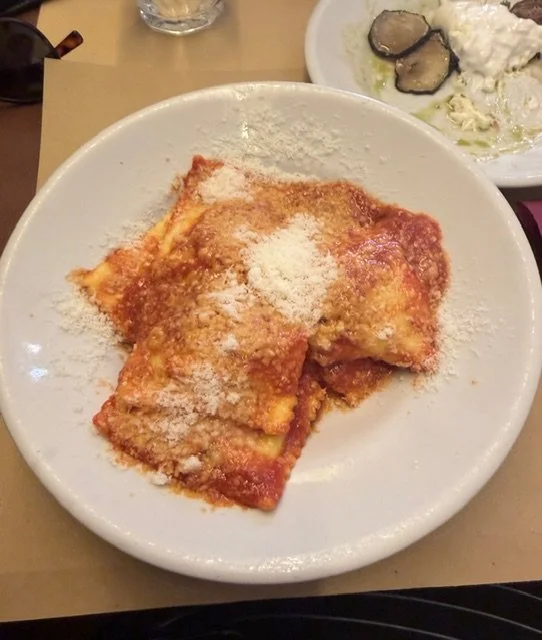
A delicious local discovery at Trattoria Etruria 39 in Rome's San Giovanni neighborhood.
However, what I didn't fully anticipate was the additional time and money we'd spend traveling back and forth to Rome's major attractions. Between taxis and Ubers, our transportation expenses added up, along with valuable sightseeing time.
What I learned: Staying in a residential neighborhood can offer wonderful cultural experiences, but location matters. Sometimes paying a little more for accommodations closer to the attractions you want to visit can actually save you both time and money.
It's all about finding the right balance between experiencing local life, convenience, and your travel budget.
5. Plan Your Special Experiences, But Leave Room for Discovery
Some of Italy's most memorable experiences deserve a little advance planning.
Popular attractions, guided tours, and private excursions can book up, particularly during the busy summer travel season.
Depending on your destinations and interests, you might consider:
A guided tour of the Colosseum and ancient Rome
Reserved entry to Florence's renowned museums
A private boat excursion along the Amalfi Coast or around Capri
A Tuscan wine-tasting experience
An Italian cooking class
A private tour of Pompeii
A scenic excursion through Tuscany's beautiful villages
But not every memorable moment needs to be part of a scheduled excursion.
One of my favorite experiences was our stay in Gaiole in Chianti, a small town in the Tuscan countryside.
Initially, I was a little concerned about how small and quiet the town seemed.
Would there be enough to do? Would we wish we'd stayed somewhere larger?
As it turned out, the peaceful atmosphere was exactly what I needed.
After busy days of sightseeing, I loved spending our evenings in the town's charming courtyard, where locals gathered to eat, visit, listen to music, and enjoy each other's company.
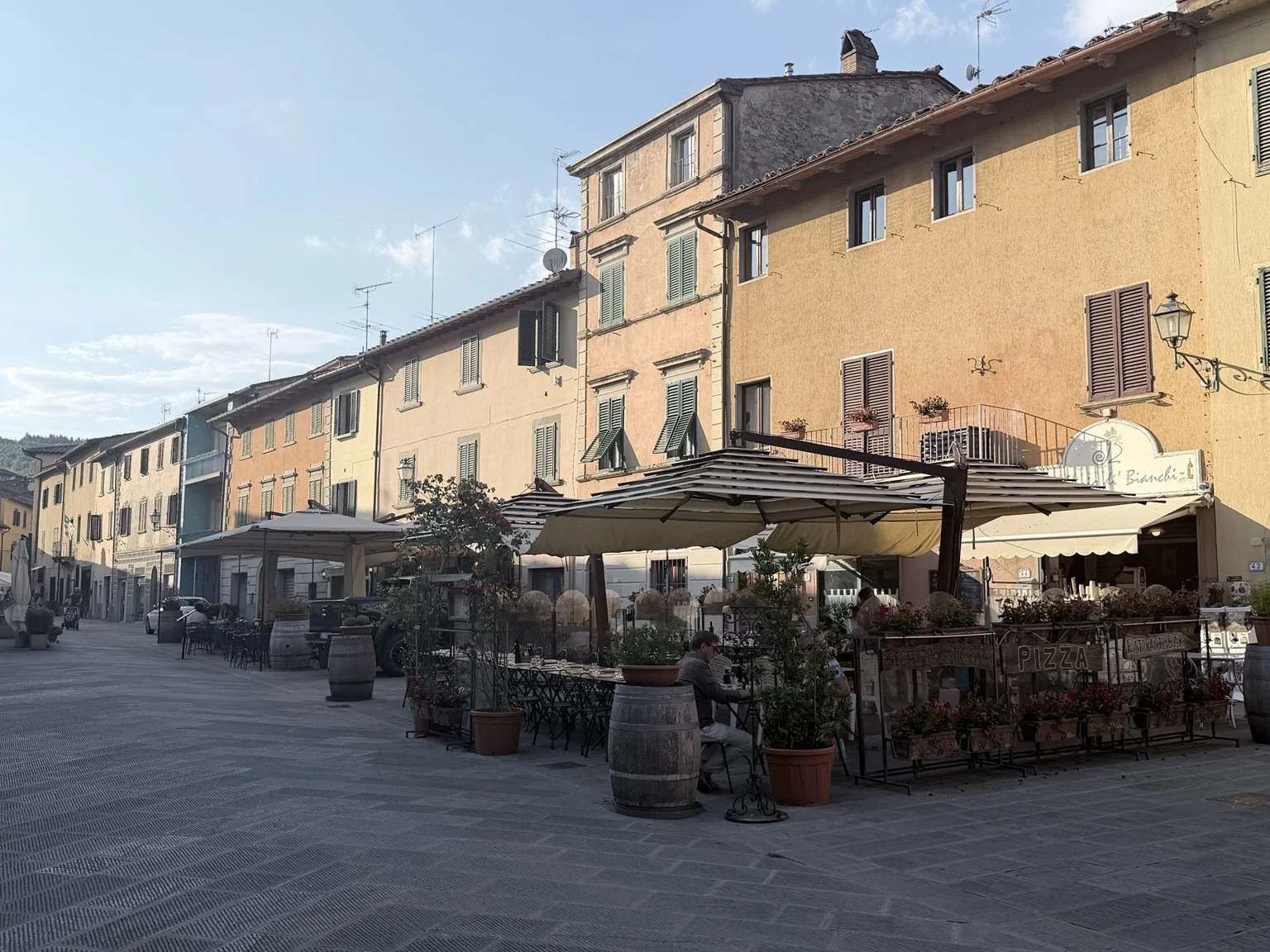
Gaiole in Chianti, Tuscany — where quiet evenings, local restaurants, and the slower pace of Italian life became some of our favorite travel memories.
Sitting outside with a glass of wine, surrounded by beautiful scenery and the sounds of everyday Italian life, became one of my favorite memories.
It wasn't about checking another attraction off our itinerary.
It was about being there.
Sometimes the places you least expect become the ones you remember most.
6. Slow Down and Enjoy the Italian Way of Life
Italy's cities are extraordinary, filled with history, culture, and unforgettable sights.
But during the busy summer months, popular destinations can also be crowded and fast-paced.
I loved experiencing the energy of the cities, yet I discovered that some of my happiest moments came when we stepped away from the crowds.
Our stay in Praiano, along the Amalfi Coast, was a perfect example.
We stayed at a small boutique hotel built into the cliffside, overlooking the beautiful sea.
Our room opened to breathtaking views of the water.
One of the things we appreciated most about Praiano was its quieter, more relaxed atmosphere compared to the busier town of Positano.
Our small, quaint hotel offered direct access to the sea by a series of steps, where we could catch a water taxi. We were also within walking distance of the nearby marina and beach.
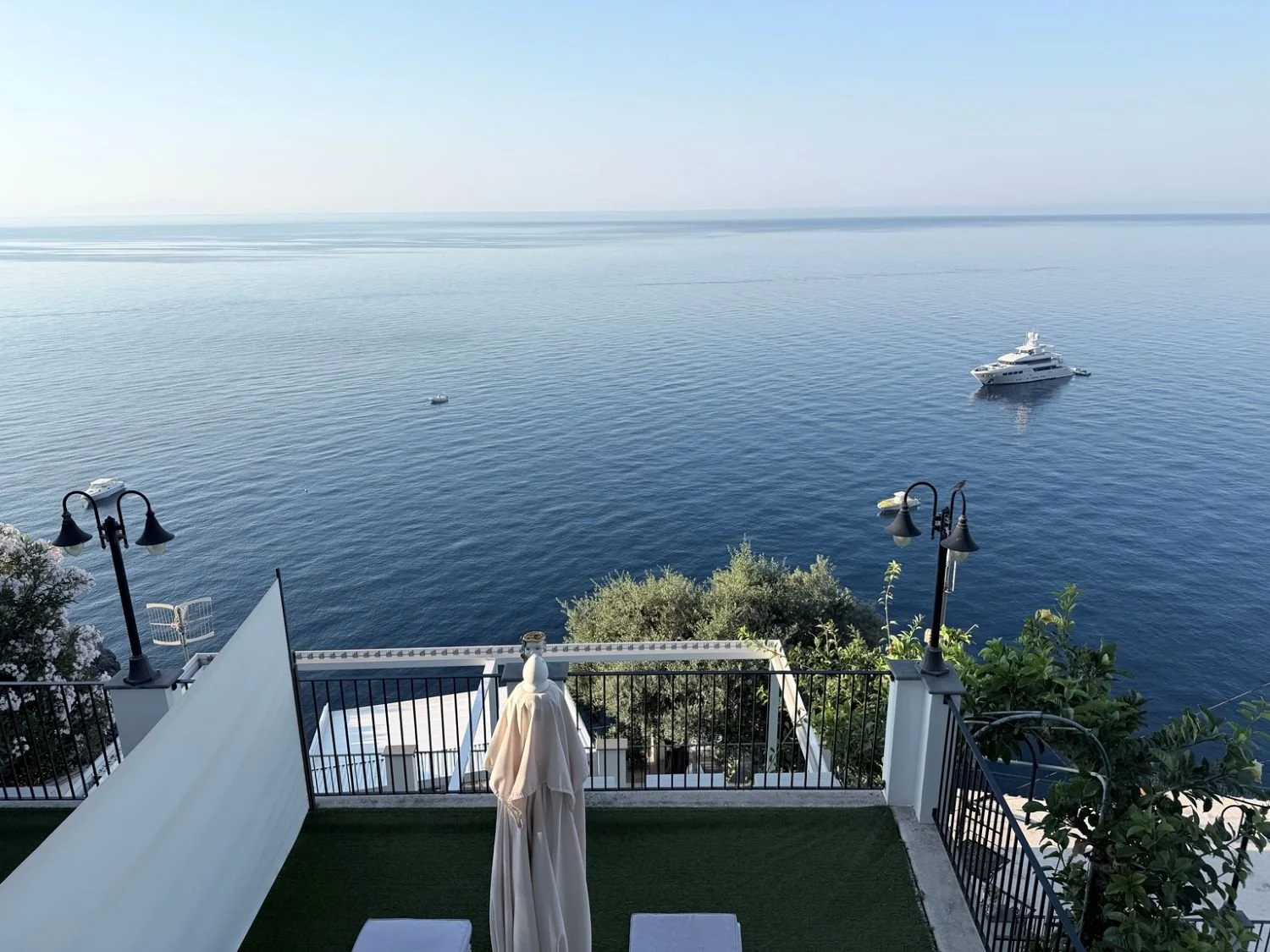
A peaceful view overlooking the Mediterranean Sea from our boutique hotel in Praiano, along Italy’s Amalfi Coast.
While both Praiano and Positano have their advantages, Praiano offered exactly the peaceful coastal experience we were looking for.
In the evenings, we'd spend time at the hotel's rooftop bar, enjoying a cocktail while watching the sunset and boats moving across the sea.
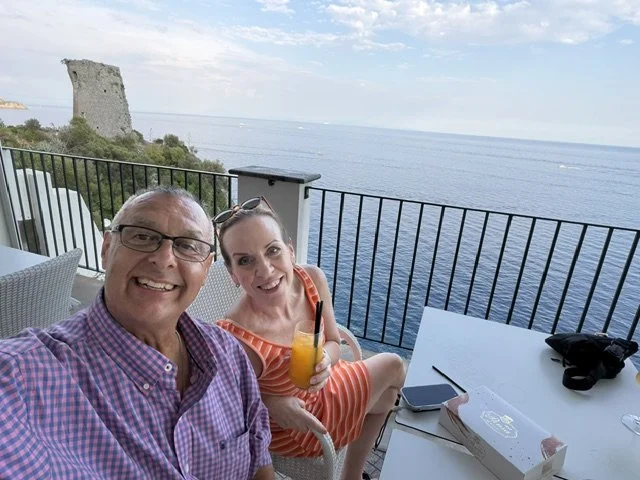
Our first evening in Praiano, enjoying cocktails and breathtaking views of the Amalfi Coast from our hotel’s rooftop terrace.
There was something incredibly peaceful about simply sitting there, taking in the view, and not feeling like we needed to be anywhere else.
Those evenings reminded me that travel isn't only about the places we visit.
It's also about how those places make us feel.
When planning your Italian adventure, try to balance sightseeing with time to relax.
Enjoy a leisurely meal. Try the local cuisine. Explore a small village. Sit at a café without watching the clock.
Leave space in your itinerary for those quiet, unplanned moments.
They may become the memories you treasure most.
7. The Best Italian Vacation Is One Designed Around You
There is no single perfect way to experience Italy.
For some travelers, the ideal vacation includes historic landmarks, museums, and guided sightseeing.
For others, it's sipping wine in Tuscany, relaxing along the Amalfi Coast, exploring charming villages, or enjoying romantic evenings in beautiful Italian cities.
And for couples, families, or groups traveling together, creating an itinerary that balances different interests can be especially important.
My own experiences have reinforced something I believe strongly:
A beautiful vacation isn't necessarily the busiest or most expensive one. It's the one that fits the way you want to travel.
That's why personalized travel planning can make such a difference.
Rather than following a one-size-fits-all itinerary, a customized journey considers your interests, travel style, budget, preferred pace, and the experiences that matter most to you.
It also brings together the many moving pieces — accommodations, transportation, excursions, and timing — into a cohesive travel experience.
Working with a travel advisor should be a collaborative process. My role is to listen, guide, offer recommendations, and help shape a journey that reflects what you envision.
Because the best travel experiences aren't about following someone else's perfect itinerary.
They're about creating your own.
Your Italian Adventure Awaits
Italy is a destination that invites you to return again and again.
There's always another charming village to discover, another beautiful coastline to explore, or another unforgettable meal waiting around the corner.
And if there's one thing my travels through Italy have taught me, it's that the most meaningful experiences often come from finding the right balance between exploring and simply enjoying.
Whether you're dreaming of Rome and Florence, the picturesque Amalfi Coast, or a leisurely journey through Tuscany, thoughtful planning can make all the difference.
At Curated Timeless Journeys, I combine my passion for travel, firsthand experiences, and personalized planning to help create journeys that reflect each traveler's dreams.
I'd love the opportunity to help you design your own unforgettable Italian adventure.
Ready to begin planning?
Visit my Plan My Journey page to share your travel ideas, and let's start creating something beautiful together.